- Home
- Departments
- Community Development
- Sustainability
- Sustainability Action Plan
Sustainability Action Plan
Last Content Update:
The Sustainability Action Plan (SAP) aligns with the sustainability priorities of Titusville's Comprehensive Plan, which defines the city's long-term vision and strategic direction for development and services. The SAP serves as a roadmap to guide the efforts toward creating a resilient and thriving future for the City of Titusville
The primary objective of the Sustainability Action Plan is to provide a comprehensive framework for advancing community sustainability by outlining Titusville's environmental, economic, and social equity goals.
With six focus areas, seven goals, 28 objectives, and 87 actionable steps, the SAP empowers city staff, committees, and residents to shape a vibrant and sustainable community for generations to come.
View Titusville's 2023 ADOPTED Sustainability Action Plan (PDF) or (DOCX)
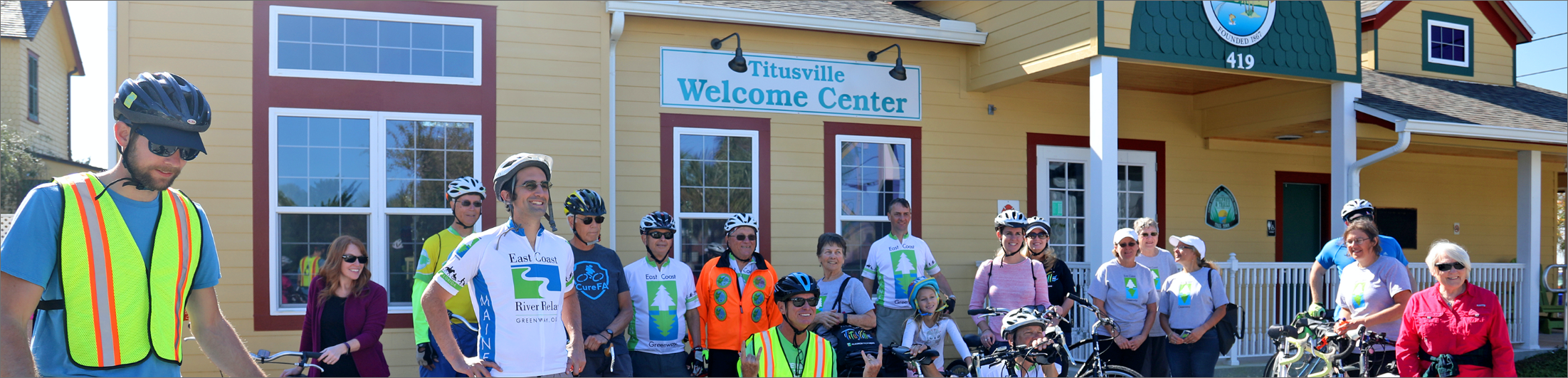
Image: Adopt A Trail program participants posing together in reflective safety vests
Goal 1: Improve sense of community and quality of life through services and programming that target promoting inclusivity, equity, and empowerment.
Targets
1.1: Demonstrate higher turnout to public workshops, City sponsored engagement events, and response rate to community-wide City surveys.
1.2: Measure baseline access to healthy food and work to increase access to healthy food to within ½ mile of every resident.
1.3: Measure baseline access to pedestrian pathways and bikeways and increase the miles of pedestrian pathways and sidewalks.
1.4: Demonstrate increased density and the number of businesses located within compact and complete neighborhoods.
1.5: Measure baseline and demonstrate progress toward reducing the number of residents living in poverty.
Objectives & Actions
1.1 | Increase citizen participation & engagement |
| 1.1.1 | Develop a public engagement guide |
| 1.1.2 | Collaborate with County agencies and local groups to conduct public education campaigns for social equity improvements. |
| 1.1.3 | Develop a public engagement strategy to engage the entire community in the implementation of the SAP |
1.2 | Expand access to healthy foods & active lifestyles |
| 1.2.1 | Provide incentives to healthful food retailers to locate in underserved areas. |
| 1.2.2 | Pilot an Urban Agriculture Program on Public Land |
| 1.2.3 | Amend the zoning code to permit urban agriculture uses |
| 1.2.4 | Partner with community groups to sponsor programs that encourage active living for adults and children |
| 1.2.5 | Partner with local health agencies to develop a Community Health Improvement Plan |
1.3 | Promote Complete Neighborhoods |
| 1.3.1 | Provide safe and comfortable sidewalks, bikeways, crosswalks, and public places that are unobstructed and barrier free for cyclists, pedestrians, and people with disabilities |
| 1.3.2 | Identify and plan for future compact and complete neighborhoods |
| 1.3.3 | Develop a community parks initiative to ensure all residents and local schools have access within a half mile to parks, greenspace, and recreation that are barrier free for people with disabilities in coordination with the NRSAP |
1.4 | Demonstrate progress towards reducing poverty & homelessness |
| 1.4.1 | Collaborate with the Housing Authority and other local housing developers and providers to ensure residents have access to all available resources |
| 1.4.2 | Develop a City-wide assessment of housing needs and strategic recommendations for improving housing affordability |
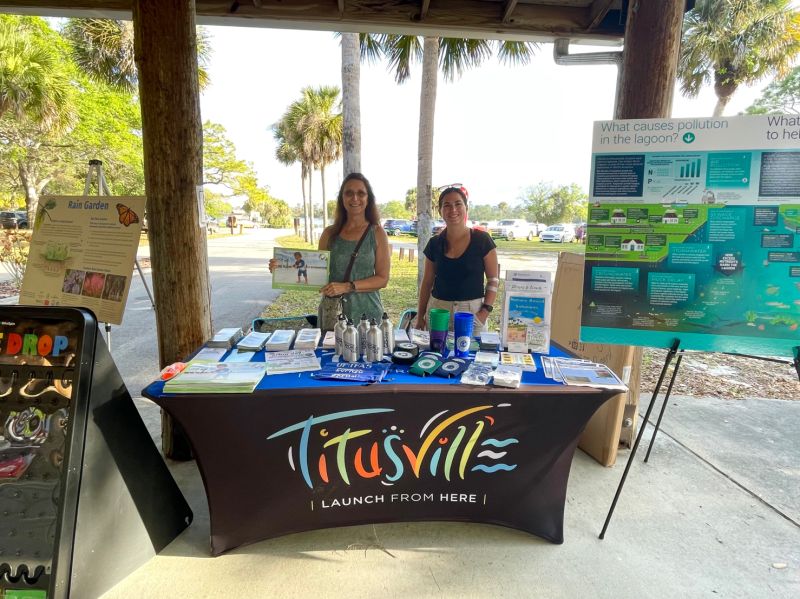 Goal 2: Protect natural resources and ecosystems and develop an ecologically resilient community
Targets
2.1: Measure baseline natural resources acreage and work to increase natural resource acreage, habitat areas, and protected wetlands.
2.2: Measure baseline application of low impact development, green infrastructure, and nature-based solutions and demonstrate increase in use on municipal projects
2.3: Measure baseline community understanding of resiliency and work to increase community awareness
Objectives & Actions
2.1 | Increase natural resource acreage and habitat area for threatened species and wetlands |
| 2.1.1 | Manage a database of natural resources and collaborate with local agencies to promote environmental stewardship |
| 2.1.2 | Develop an Urban Forestry Management Plan to manage tree infrastructure and canopy |
| 2.1.3 | Promote UF/IFAS Brevard County Extension Florida-Friendly Landscaping Program |
2.2 | Prioritize the use of green infrastructure, low impact development, and nature-based solutions |
| 2.2.1 | Continue to develop an inventory of low impact development public projects and establish a network of demonstration sites with educational material and signage |
| 2.2.2 | Offer incentives for residents that implement green infrastructure projects including rain barrels, rain gardens, pervious pavement, etc. |
| 2.2.3 | Provide education and resources to homeowners on Florida Friendly Lawns and reducing the use of pesticides and garden chemicals. |
| 2.2.4 | Evaluate current and planned stormwater infrastructure projects and determine the feasibility of incorporating additional green infrastructure |
2.3 | Continue to make demonstrable progress towards Resilient Titusville’s Goals and Objectives |
| 2.3.1 | Identify and designate Adaptation Action Areas within the City |
| 2.3.2 | Develop annual reports and update the plan on a 5-year basis. |
View the 2019 Resilient Titusville Report (PDF)
2.4 | Foster ecosystem and resiliency education and empowerment |
| 2.4.1 | Continue education and outreach initiatives about sea level rise, climate change, and the Indian River Lagoon |
| 2.4.2 | Collaborate with volunteer programs and organizations to assist with habitat restoration efforts on public and private properties. |
| 2.4.3 | Create native plants demonstration and education sites with plant details at local parks |
 Goal 3: Reduce energy consumption and transition to clean energy
Targets
3.1 Incrementally reduce GHG emissions and set an achievable timeline to reach a GHG emission goal.
3.2 Incrementally reduce energy consumption and set an achievable timeline to reach energy consumption goals.
3.3 Determine a goal and timeline to have a certain percent of city operations on renewable energy.
Objectives & Actions
3.1 | Reduce Greenhouse Gas (GHG) Emissions |
| 3.1.1 | Develop a plan for increasing the green municipal fleet including EV, Hybrid, and Fuel-Efficient vehicles |
| 3.1.2 | Report GHG emissions for municipal operations and community-wide at minimum every 5 years |
| 3.1.3 | Study pathways to achieve net zero GHG by 2050 |
| 3.1.4 | Engage local businesses and industries to reduce GHG emissions through outreach, education, and advisory services |
3.2 | Reduce energy consumption |
| 3.2.1 | Collect and report annual, city-wide energy consumption. |
| 3.2.2 | Study current municipal energy consumption and implement energy efficiency practices |
| 3.2.3 | Develop an educational campaign to reduce household energy consumption |
3.3 | Make progress towards obtaining electricity from renewable energy sources |
| 3.2.1 | Determine viability of renewable energy installations for all municipal facilities |
| 3.2.2 | Partner with Florida Power and Light on opportunities to expand and promote renewable energy for residential and commercial use |
| 3.2.3 | Prioritize future EV charging stations based at City facilities are powered by renewable energy through the use of battery storage systems |
 Goal 4: Continue to improve and adopt innovative infrastructure to improve quality of life
Targets
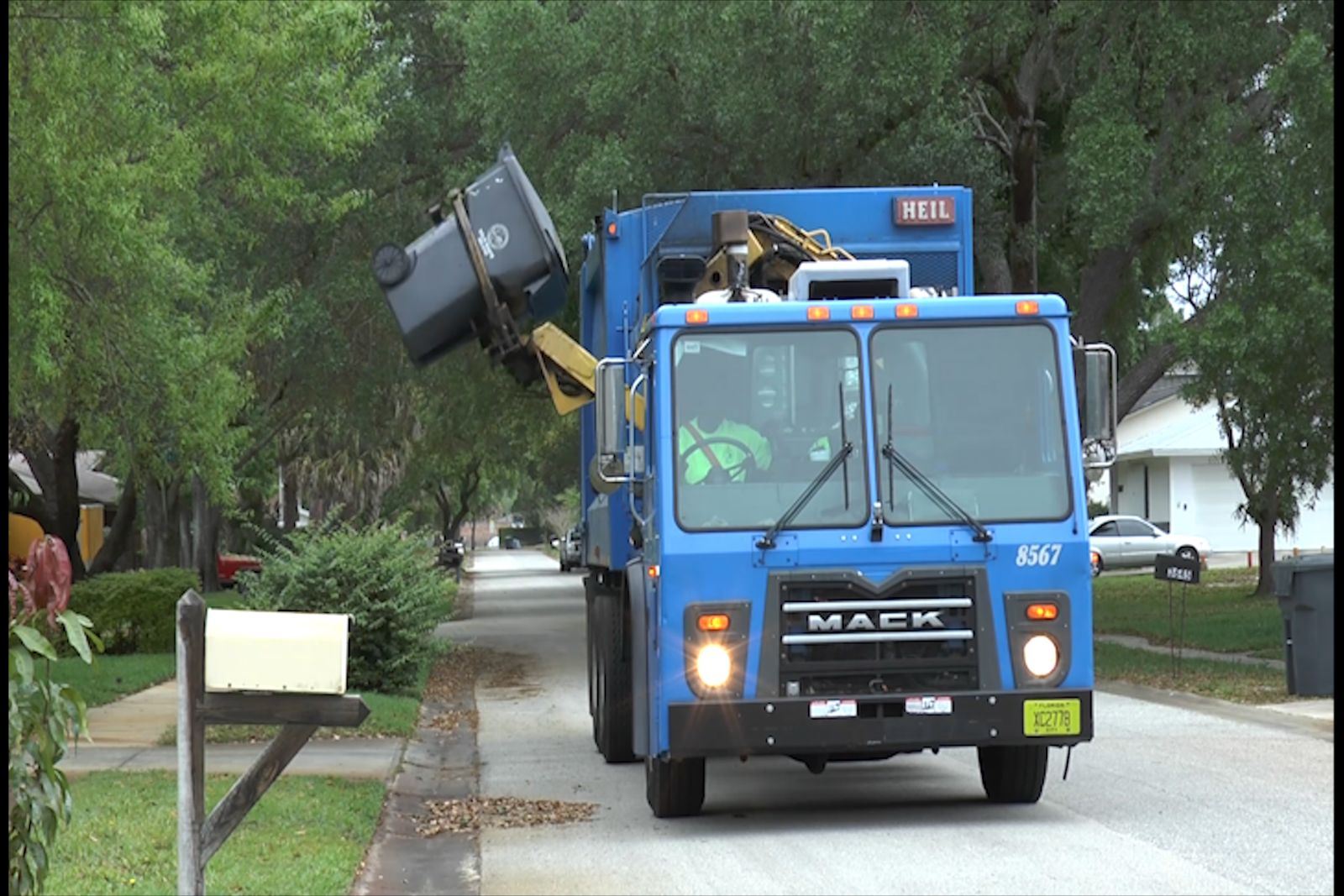
4.1 Make considerable progress towards a 75% diversion rate from landfill use.
4.2 Make considerable progress towards reducing the number of vehicles per household by the next census count.
Objectives & Actions
4.1 | Achieve a 75% diversion rate from recycling, composting, reducing consumption, and reusing materials |
| 4.1.1 | Develop and implement a Sustainable Waste Management Plan |
| 4.1.2 | Study feasibility of implementing a Commercial Food Waste Collection Program |
| 4.1.3 | Establish construction & demolition (C&D) recycling standards to serve as a guideline to divert recoverable materials and products from landfills |
| 4.1.4 | Implement a residential backyard composter program |
| 4.1.5 | Explore the long-term opportunity for a Materials Recovery Facility in Titusville |
4.2 | Reduce Citywide Vehicle Miles Traveled (VMT) through multimodal transportation Planning |
| 4.2.1 | Adopt a Complete Street program to formalize the City’s intent to plan, design, and maintain streets for users of all ages and abilities |
| 4.2.2 | Research viability of micromobility options including car-sharing and bicycle rentals |
| 4.2.3 | Implement Mobility Plan to install and maintain bicycle and pedestrian infrastructure city-wide |
| 4.2.4 | Educate and encourage residential, municipal, and commercial carpooling initiatives |
| 4.2.5 | Prioritize funding for alternative transportation over capacity improvements for vehicles |
4.3 | Develop a Smart Cities Initiative to Boost Urban Innovation |
| 4.3.1 | Develop a strategic EV charging network throughout the City and adopt an EV readiness ordinance |
| 4.3.2 | Deploy smart technology solutions at appropriate locations throughout the City including, smart solar-powered trash compactors, air quality sensors, smart irrigation systems, and smart streetlights |
| 4.3.3 | Partner with the Space Coast TPO on the implementation of the regional Intelligent Transportation System Master Plan and other smart technology including smart traffic lights, Smart phone applications to improve public transportation services |
 Goal 5: Reduce gross potable water consumption and continue provisions to provide safe and reliable drinking water
Targets
5.1 Measure baseline water consumption and work to decrease water consumption to sustainable levels.
5.2 Demonstrate reductions in water consumption at city facilities and operations.
5.3 Demonstrate effectiveness of water conservation education programs.
Objectives & Actions
5.1 | Reduce per capita daily water consumption |
| 5.1.1 | Continue and expand rebate opportunities for water efficient fixtures and water-saving technology |
| 5.1.2 | Implement an educational home leak detection repair program |
| 5.1.3 | Explore additional opportunities for implementing water conservation programs and initiatives |
5.2 | Reduce water consumption of City Operations |
| 5.2.1 | Explore opportunities to reduce indoor and outdoor potable water use at city facilities |
| 5.2.2 | Study municipal water usage to identify high consumption operations within the City and strategically target water conservation efforts at city facilities |
| 5.2.3 | Incorporate low-flow fixtures and fittings to future improvements to City-owned facilities kitchens and restrooms |
5.3 | Maintain clean and reliable sources of drinking water |
| 5.3.1 | Continue to upgrade/replace water mains based on Water Master Plan |
| 5.3.2 | Promote the use of reusable water bottles by installing clean and reliable hydration stations |
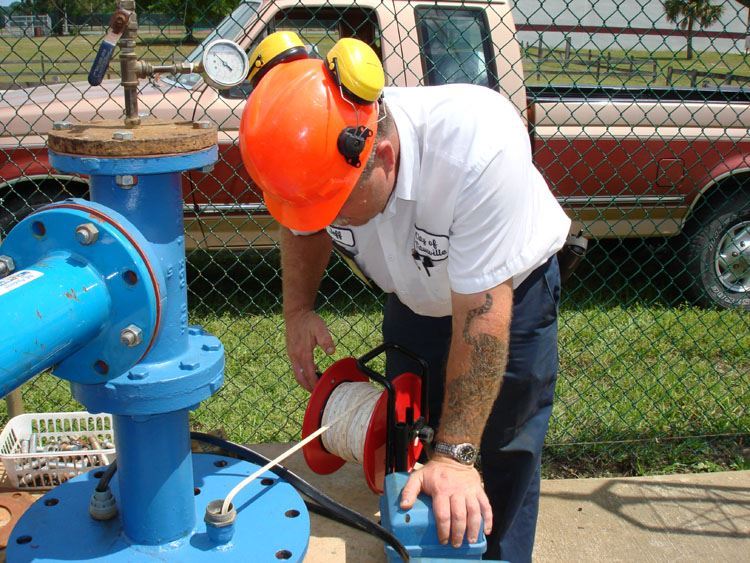
| 5.3.3 | Continue to provide accessible and regular water quality testing analysis |
5.4 | Ensure adequate water supply as the City continues to grow |
| 5.4.1 | Develop a plan and protocols for future water quality threats and water hazard mitigation |
| 5.4.2 | Continue to review and update drought contingency policies in the event of future emergencies, as necessary |
5.5 | Continue education programs for water conservation |
| 5.5.1 | Continue to provide water conservation outreach and initiatives in neighborhoods with older plumbing and infrastructure or well water |
| 5.5.2 | Develop and partner with local organizations on an enhanced public education campaign to encourage water conservation with a focus on peak water use times |
 Goal 6: Utilize Smart Growth policies to promote sustainable land use
Targets
6.1 Continuously track buildings using sustainable practice and show year over year growth in building using said practices.
6.2 Demonstrate higher densities in key areas within the city.
6.3 Make progress towards reducing the City's average (H+T®) index.
6.4 Demonstrate equitable distribution of housing types and price points.
6.5 Measure baseline access to pedestrian and bicycle infrastructure and show improvements in access.
Objectives & Actions
6.1 | Increase the number of buildings using sustainable practices |
| 6.1.1 | Implement LEED or equivalent designation for all new city facilities |
| 6.1.2 | Create a green building toolkit for new construction and existing buildings |
| 6.1.3 | Adopt green building standards and incentives for new construction, affordable housing, and infill/redevelopment |
6.2 | Increase the number of residents living within Complete Neighborhoods |
| 6.2.1 | Promote the use of Compact and Complete Communities principles for all new development and redevelopment efforts |
| 6.2.2 | Develop Small Area Plans for key corridors of the City to concentrate development |
6.3 | Promote policies and programs that will reduce household spending on housing and transportation combined |
| 6.3.1 | Measure location efficiency through the combined cost of housing and transportation and encourage affordable housing in areas where transportation costs are lower due to accessible public transit |
| 6.3.2 | Develop appropriate strategies for new civic and commercial development in low- and moderate-income neighborhoods |
6.4 | Increase housing units at all price points |
| 6.4.1 | Amend Land Development Regulations (LDRs) to allow for a larger range of housing options in development and higher densities |
| 6.4.2 | Support initiatives and/or developments that provide permanent supportive housing for low-income households, and target populations such as seniors, veterans, and homeless |
6.5 | Increase access to pedestrian and bicycle infrastructure |
| 6.5.1 | Provide safe and comfortable sidewalks, bikeways and crosswalks that are unobstructed and barrier free for people with disabilities, including wheelchair users and people with low vision |
| 6.5.2 | Prioritize safe pedestrian and bicycle infrastructure in high injury corridors through a Vision Zero Action Plan |
 Goal 7: Promote a diverse and resilient local economy and workforce
Targets
7.1 Demonstrate that the unemployment rate for key sociocultural groups is within 5 percentage points of the overall unemployment rate.
7.2 Create metrics for the determination of green businesses and demonstrate growth in the number of business that are green within the city.
Objectives & Actions
7.1 | Demonstrate City Leadership in Sustainability |
| 7.1.1 | Develop a sustainable purchasing policy with a list of standard recommended consumable products for compliance with the policy |
| 7.1.2 | Strengthen procurement standards that encourage purchases of local goods and services first |
| 7.1.3 | Develop a greater alliance and partnership with local high schools, universities, technical colleges, training centers, etc. |
7.2 | Advance equitable employment |
| 7.2.1 | Provide workforce training opportunities and resources for residents seeking employment |
| 7.2.2 | Provide resources for local small businesses including access to high-speed internet, networking opportunities, trainings, etc. |
7.3 | Support a local circular economy |
| 7.3.1 | Encourage land use and economic development policies that support neighborhood retail and Titusville-based startups, to build a local, circular economy |
| 7.3.2 | Develop a strategic plan for a Circular Titusville including feasibility for projects including a Circular Titusville Community Grant Program, Circular Titusville Ambassador program |
| 7.3.3 | Empower citizens to reduce material consumption and reuse/recycle materials and goods through marketing, demonstration projects, and social media campaigns |
7.4 | Promote Green Businesses and Ecotourism |
| 7.4.1 | Develop sustainable financial incentive programs to prioritize the proliferation of green businesses within the CRA |
| 7.4.2 | Develop a Green Business Voluntary Program to assist and promote, recognize, and help develop local businesses committed to improving sustainability in Titusville |
| 7.4.3 | Encourage cleantech and low-carbon technology startups and other sustainable and circular R&D and innovation within the City |
-
Titusville showcased on regional low impact development tour
The City of Titusville was a featured stop and presenter during this year’s Low Impact Development (LID) Conference field trip, hosted by the Marine Resources Council (MRC). Read on... -
June Tree Planting Event
-
Tree Planting
Titusville Tree Team August 2024 Tree Planting Read on...